















Retirement Living and Retirement Villages in Hobart, Tasmania
Hobart offers access to 32 retirement villages and over-55 living options, making it a strong retirement market for people who want both natural beauty and practical city access. For retirees comparing retirement living in Tasmania, the region stands out for its cooler climate, scenic waterways, established hospital network and more compact pace than larger mainland capitals.
From South Hobart and Sandy Bay to Kingston, Glenorchy, Rosny and Lindisfarne, Hobart gives retirees a wide mix of lifestyle settings, from inner-city hillside neighbourhoods to quieter suburban pockets with strong service access. Villages.com.au helps you compare local communities, village types and lifestyle features in one place so you can research with more confidence.
Living in Hobart - A Retiree's Guide
Key Areas
Hobart includes several distinct local hubs, each with a different retirement appeal:
South Hobart and Sandy Bay: established inner-south areas with strong amenity and healthcare access
Kingston: practical southern growth corridor with shopping, services and easier day-to-day living
Glenorchy and Moonah: northern suburbs with strong transport and shopping convenience
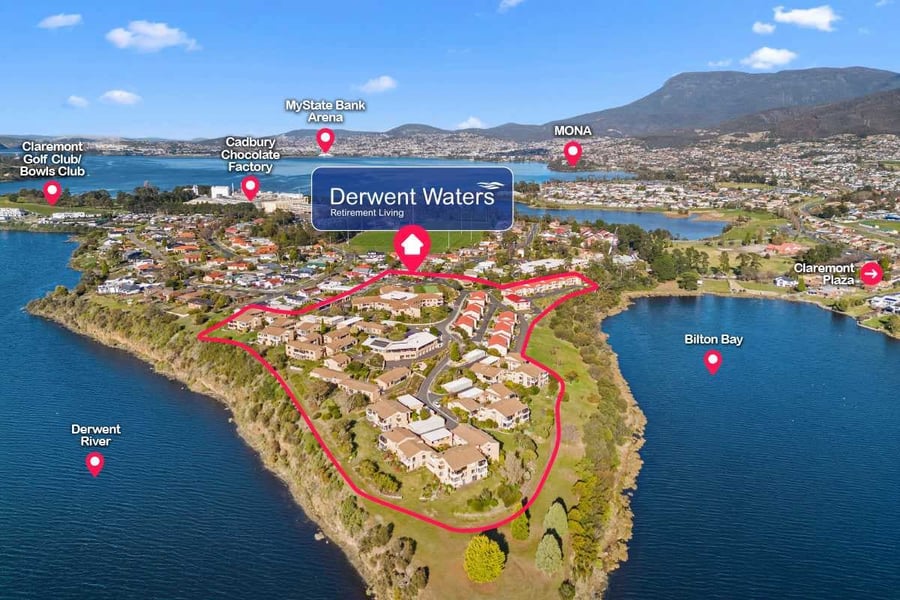
Rosny, Lindisfarne and the eastern shore: river outlooks with broad suburban amenity
Compared with Adelaide Hills, Hobart often feels more compact and waterfront-oriented, while Adelaide Hills tends to feel greener, hillier and more village-centred. For many retirees, the choice comes down to whether they prefer a scenic small-capital feel or a hills-town lifestyle near Adelaide.
Climate & Lifestyle
For many retirees, Hobart offers a distinctive lifestyle mix. The region combines cooler seasons, river and mountain outlooks, gardens, walking tracks and cafe precincts with the practicality of a small capital city.
Lifestyle highlights include:
Waterfront access and scenic outlooks across many suburbs
Cooler temperatures than many mainland capitals
Established local centres, markets and community facilities
This mix supports active retirement living without giving up the convenience of major services.
Getting Around
Transport and access matter in retirement, and Hobart performs best for people who want a manageable city scale rather than heavy metropolitan sprawl.
Roads and Metro Tasmania buses connect key suburbs across greater Hobart, and Greencard / senior fare options support lower-cost local travel
Hobart's compact city scale means many trips between suburbs, the CBD, the waterfront and major health precincts are comparatively short by mainland-capital standards
Many retirement communities sit close to local centres and essential services
Healthcare Access
Healthcare access is one of Hobart's practical strengths. Residents benefit from proximity to Royal Hobart Hospital, Hobart Private Hospital, Calvary Health Care Lenah Valley and St John's campuses, and a broad network of local GPs, pharmacies and allied health providers.
Key advantages include:
Royal Hobart Hospital as the state's major public tertiary and teaching hospital anchor, with the redevelopment program having expanded the campus over recent years
Hobart Private Hospital and Calvary Health Care Lenah Valley for private and specialist care
St John's Park campus support and practical access to local medical centres across greater Hobart
That combination can make Hobart retirement living feel both secure and practical over the long term, especially for retirees who want strong health access within a smaller capital-city environment.
For retirees who want lifestyle benefits without feeling remote, the region offers a useful balance between access and breathing room.
Understanding Retirement Living in Tasmania
If you are comparing retirement living in Hobart, it is important to look beyond the entry price alone. Retirement villages in this state are governed by the Retirement Villages Act 2004 and related Tasmanian regulations, which set out disclosure rules, residence contract requirements and resident protections.
Prospective residents should review the residence contract carefully and make sure they understand the ingoing contribution, recurrent charges, exit arrangements and any deferred management or departure fees that may apply. Tasmania's legal framework places a strong emphasis on clear contract documentation and the status of the village land.
The Retirement Villages Regulations 2025 also support the operational framework around contracts and resident protections. Tasmania's exit-timing rules are especially relevant for retirees comparing interstate options: if a unit is not sold within six months after a resident leaves, the operator is generally required to begin paying the exit entitlement unless a specific extension applies. In a market such as Hobart, where contract structures and village styles can vary, it is especially important to compare fees, services and exit conditions carefully rather than focusing only on the ingoing amount.
Contract structures can differ between villages. Depending on the arrangement, residents may enter under a leasehold, licence-to-occupy, strata or other form of occupation right. Because legal structure affects rights, ongoing costs, exit outcomes and whether stamp duty applies, legal and financial review is important before committing.
Some residents may also need to consider how retirement village costs interact with pension, assets and rent assistance rules. In many Tasmanian retirement village arrangements, which often operate on a leasehold or licence-to-occupy basis, stamp duty may not apply in the same way as a standard residential purchase. Checking the specific contract before signing is still important because outcomes depend on the legal and financial structure of the village.
About This Guide
Author: Retirement Living Specialist
Last Updated: April 2026
Based on Tasmanian retirement village guidance and local market insights