





















35 Retirement Living and Retirement Villages in Southern Downs, QLD
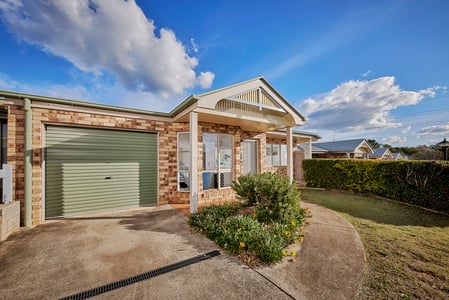
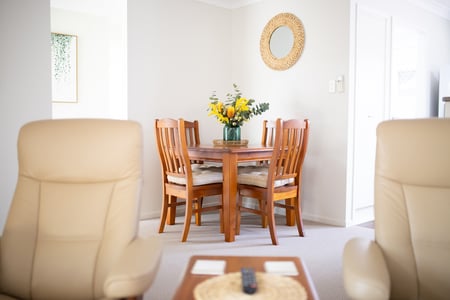
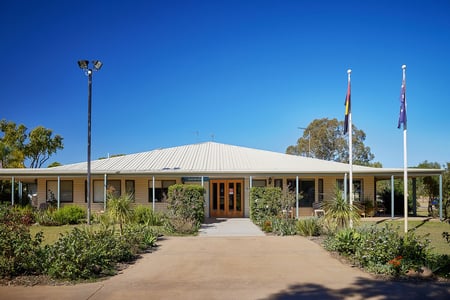
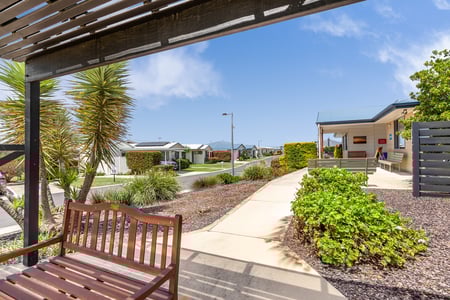
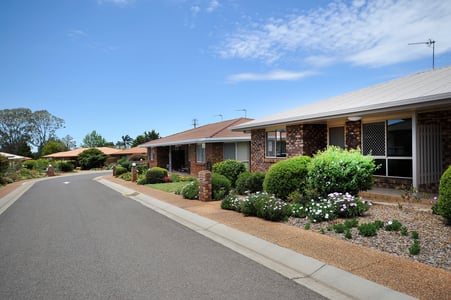
Southern Downs offers access to 35 retirement villages and over-55 living options, making it one of southern Queensland's more practical retirement regions for people who want both community-led living and access to larger service centres. For retirees comparing retirement living in Queensland, the region stands out for its cooler elevated climate, strong local towns and access to larger Darling Downs healthcare and shopping hubs.
From Warwick and Stanthorpe to Allora, Toowoomba, Highfields and Middle Ridge, Southern Downs gives retirees a mix of lifestyle settings, from smaller local communities to larger service-centre environments with stronger village choice. Villages.com.au helps you compare local communities, village types and lifestyle features in one place so you can research with more confidence.
Living in Southern Downs - A Retiree's Guide
Key Areas
Southern Downs includes several distinct local hubs, each with a slightly different retirement appeal:
Warwick and Allora: community-led towns with practical everyday amenity and a slower pace
Stanthorpe: elevated inland living with a cooler climate and strong local character
Toowoomba, Highfields and Middle Ridge: larger service-centre settings with more healthcare access, shopping and village variety
Compared with the Sunshine Coast, Southern Downs often feels cooler, slower and more town-based, while Sunshine Coast offers a more coastal and master-planned retirement lifestyle. For many retirees, the choice comes down to whether they prefer inland highland living or a larger coastal corridor.
Climate & Lifestyle
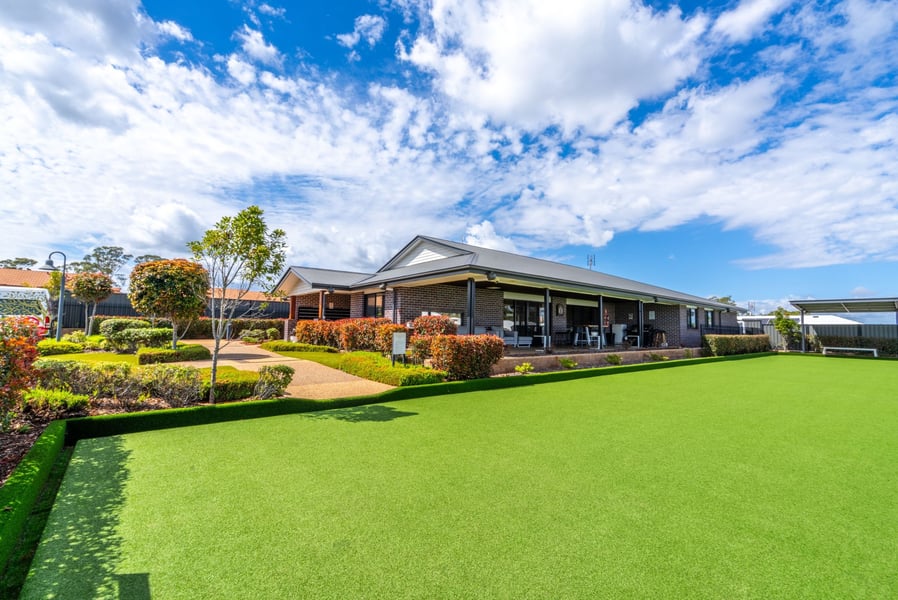
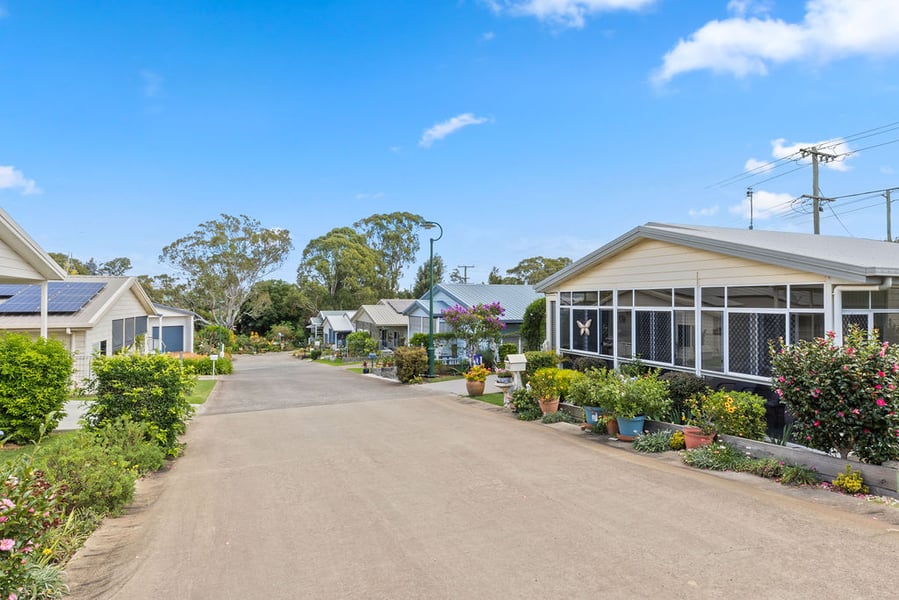
For many retirees, the Southern Downs lifestyle is the major drawcard. The region combines cooler elevated conditions, gardens, walking paths, vineyards, local town centres and community clubs, giving retirees a practical alternative to hotter inland regions and busier coastal corridors.
Lifestyle highlights include:
Cooler winters and milder highland conditions than much of inland Queensland
Gardens, parks, walking tracks and community-led town life
Food, wine and produce appeal around Stanthorpe and the granite belt
A stronger small-town feel than many coastal retirement markets
This mix supports active, social retirement living without giving up access to practical services.
Getting Around
Transport and access matter in retirement, and Southern Downs performs best as a practical road-connected region.
The Cunningham Highway and broader Darling Downs road network connect residents back toward Brisbane and Toowoomba
Local and regional bus services support access between major towns and nearby service centres
Warwick remains reasonably accessible by road to Brisbane for occasional specialist appointments, major shopping and family visits
Most communities are car-friendly while still retaining practical access to shopping, healthcare and community services
For retirees who want independence without feeling isolated, the region offers a useful balance between regional lifestyle and day-to-day accessibility.
Healthcare Access
Healthcare access is one of Southern Downs' practical strengths. Residents benefit from proximity to Toowoomba Hospital, St Vincent's Hospital Toowoomba, Warwick Hospital, Stanthorpe Hospital and a broad network of local GPs, pharmacies and allied health providers across the region.
Key advantages include:
Toowoomba Hospital and St Vincent's Hospital Toowoomba as the main larger referral hubs for specialist care
Warwick Hospital and Stanthorpe Hospital supporting local access across the Southern Downs as part of the Darling Downs Health network
Broader medical support through Darling Downs Health and community-based providers
That combination can make Southern Downs retirement living feel both secure and highly practical over the long term.
Understanding Retirement Living in Queensland
If you are comparing retirement living in Southern Downs, it is important to look beyond the entry price alone. Retirement villages in this state are governed by the Retirement Villages Act 1999, which sets out disclosure rules, contract requirements and resident protections.
Queensland places strong emphasis on precontract information. Operators must generally provide key disclosure documents at least 21 days before a resident enters into a residence contract, unless that disclosure period is validly waived after legal advice. After signing, residents generally have a 14-day cooling-off period and can withdraw without penalty. Villages are also required to provide a Village Comparison Document, or VCD, which helps retirees compare fees, facilities and contract terms on a like-for-like basis.
For 2025-26 and beyond, Queensland has also strengthened retirement village financial transparency. Under the Retirement Villages (Financial Documents) Amendment Regulation 2024, village budgets, quarterly statements, annual financial statements and audit reports now carry more prescribed detail, giving residents better visibility over village finances before and after they move in.
Contract structures can vary between villages. Depending on the arrangement, residents may pay an ingoing contribution, recurrent charges and exit or deferred management fees when they leave. Because contract structure affects ownership rights, ongoing costs and exit outcomes, legal and financial review is important before committing.
For unsold units, the current Queensland standard generally requires payment of the exit entitlement within 18 months after termination, subject to the statutory framework and limited exceptions. Queensland has also formally supported reform toward a 12-month buyback and exit payment model from vacant possession, which is a useful direction-of-travel signal for retirees comparing operators.
Queensland's reform pathway also includes an aged-care transition protection. In applicable cases, a resident moving into residential aged care can request that the operator pay the Daily Accommodation Payment directly to the facility, with those payments then deducted from the resident's final exit entitlement. Stamp duty outcomes also depend on the contract and legal structure, so they should not be assumed either way.